
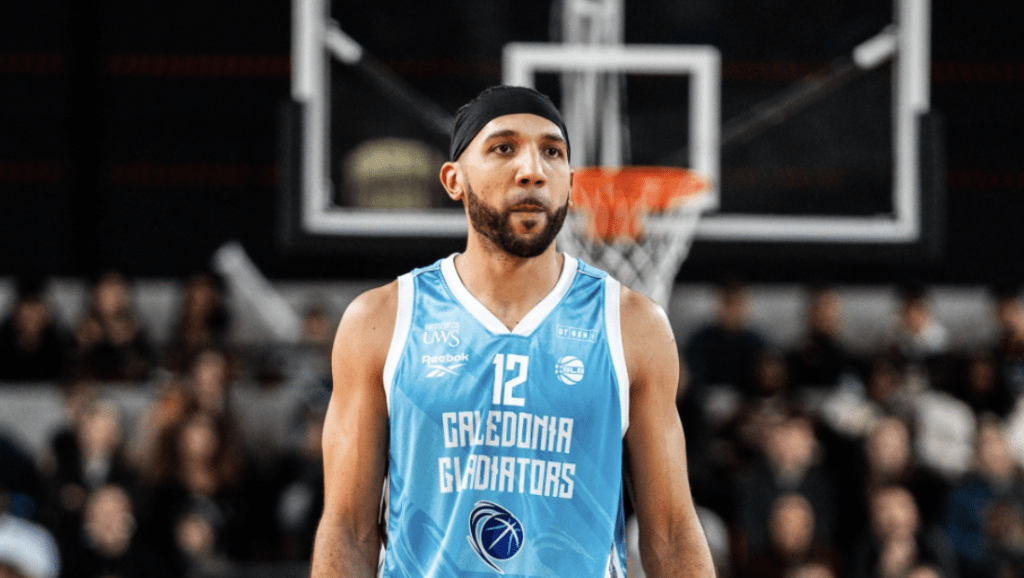
By the time Caledonia found stability, the season had already slipped away. Four head coaches, a full roster shuffle, and months of damage control—all before March. It started with a rocky run and the departure of Gareth Murray, a long-time club servant. Lluis Reira stepped in as interim, but it was Robbie Peers—an experienced BBL title-winner—who was brought in to steady the ship. Instead, the turbulence deepened.
A full roster overhaul followed. Scottish guard Kyle Jimenez, among others, departed, while new American imports brought in by Peers took on heavy minutes. But performances declined further, and it wasn’t long before Peers himself left the club. Two of his signings had already been released—one later revealed to be a suspect in an open murder case back home.
The Timoney project to build a basketball nation, launched in 2022, suddenly looked rudderless.
To regain control, Caledonia turned to familiar ground. Jonny Bunyan—a long-time player and respected club figure—was appointed head coach. With a more coherent playing style and better-fitting imports, the team became more competitive down the stretch. But the gap between them and the rest of the league was too wide. Caledonia finished bottom of the Championship table, the only team to miss the play-offs.
Three Coaches, Three Styles
Caledonia’s season can be split into three distinct phases—each shaped by a different coach, and each defined by a different kind of imbalance.
Under Gareth Murray, the Gladiators were aggressive inside, leading the three eras in paint scoring (36.8 per game), free throw attempts (20.3), and true shooting percentage (55.1%). But that came at a cost. Their defensive rating of 117.4 was a problem and a lack of clean ball movement (1.03 AST/TO ratio) meant the offence sometimes stalled despite its efficiency.
Robbie Peers brought in new imports and pushed the pace (76.8)—but the structure fell apart. The team’s true shooting dropped to 50.5%, paint scoring collapsed to 30.7 per game, and they posted the worst net rating of the season at -16.6. The Peers era was defined by disarray—on the court and off it.
Jonny Bunyan offered clarity. The pace slowed to 72.0 possessions per game, turnovers fell, and the assist-to-turnover ratio climbed to 1.22. The offence wasn’t explosive, but it functioned. The net rating (-9.20) improved back towards where it had been under Gareth Murray. For the first time in months, Caledonia looked like a team with a plan.
| Stats | Gareth Murray | Robbie Peers | Jonny Bunyan |
|---|---|---|---|
| Games Played | 10 | 9 | 19 |
| NRtg | -7.71 | -16.63 | -9.20 |
| ORtg | 109.65 | 94.08 | 108.44 |
| DRtg | 117.36 | 110.71 | 117.63 |
| TS% | 55.1% | 50.5% | 54.9% |
| FTA Per Game | 20.3 | 15.3 | 17.9 |
| Paint PTS Per Game | 36.8 | 30.7 | 31.3 |
| AST/TO Ratio | 1.03 | 1.0 | 1.25 |
| Pace | 74.1 | 76.8 | 72.0 |
Caledonia Blues
This season also marked the launch of Caledonia Blues, a new U23 development team designed to bridge the gap between amateur and professional basketball in Scotland. The aim is to keep homegrown talent in Scotland rather than forcing players to move elsewhere. According to Head of Basketball Miguel Ortega, the Blues could be “transformative for Scottish basketball”—creating a sustainable pipeline and instilling professional standards from an early age. It’s a long-term investment—and a sharp contrast to the chaos that defined the senior squad.
Women’s Team Success
Caledonia is one of the few SLB clubs where the men’s and women’s programmes feel truly integrated—and this year, the women delivered. They lifted the Betty Codona Trophy in January, etching their names onto the club sword, and have gone on to qualify for the SLB play-offs. In a season where the men fell short, the women have given Caledonia moments to be proud of.
Only a Stumble
There’s a difference between losing your place and losing your direction. Caledonia spent much of the season adrift—cycling through coaches, overhauling the roster and watching results slip further out of reach. For a while, it felt like they’d lost sight of where they were going. But clarity returned. Under Jonny Bunyan, the system settled and the team looked like a team again. Off the court, the Blues offer a blueprint for the future, and the women’s side is already delivering on it.
The course correction has begun. Sometimes you have to spend time away to really appreciate the homecoming.
