
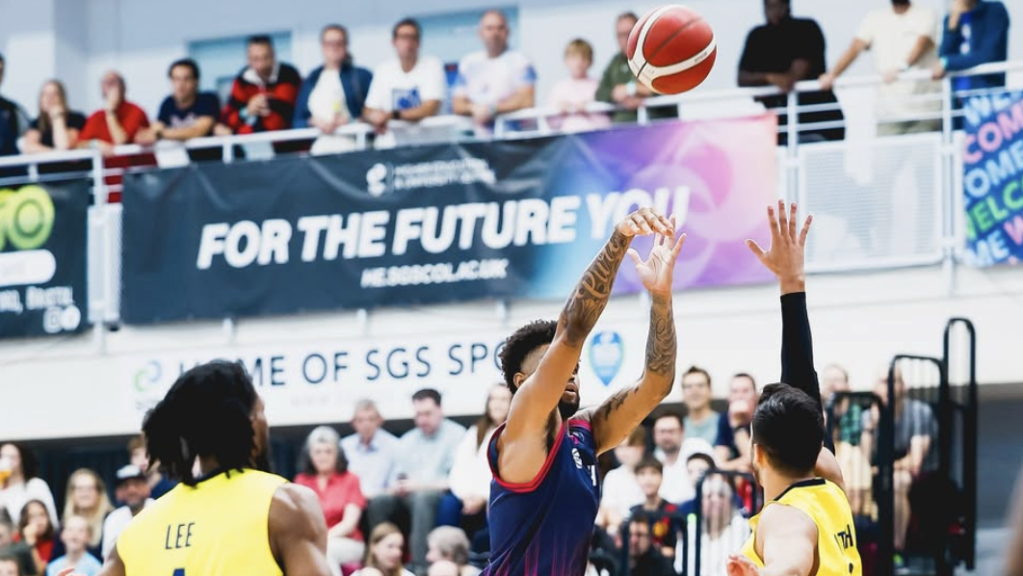
The opening night of the second season of the SLB was meant to be about the basketball. Six teams took the floor with refreshed rosters and a summer of preparation, eager to prove the league was more than an improvised debut.
Instead, it arrived in the shadow of refereeing uncertainty and FIBA intervention. When the opening tip-offs finally came, it wasn’t something to take for granted. It was a victory in itself — fragile proof that the season could begin at all.
Summer of Escalation
If last season marked the rupture between the SLB and the BBF, this summer brought escalation.
In July, the SLB officially launched legal action, publishing a 29-page claim that demanded recognition rather than a licence and laid out grievances over the tender process and subsequent decisions. In response, the BBF filed a counterclaim — defending its tender, backing the long-term GBBL licence, and arguing that SLB has abused its position by resisting oversight and seeking to block competition.
The legal battle soon spilled onto the court: Manchester were denied entry to the FIBA-run Basketball Champions League by the BBF and instead entered the ENBL, where no endorsement was required. Visas for import players were withheld until Basketball England and the Home Office intervened. Each flashpoint showed that even as the league pushed for recognition on its own terms, it remained entangled with the structures it sought to challenge.
Chaos Before the Whistle
By September, with European entries settled and rosters filled, one final obstacle remained. Referees feared that working in an unrecognised league could jeopardise their FIBA status. Without recognition, the SLB could not guarantee officials. It was a stark reminder of the limits of the league’s independence.
In the middle of the standoff, Sanjay Bhandari released his first statement as SLB chair. It was not a rallying cry or a vision for growth, but a plea: for clubs, officials, and the BBF to observe a “Do No Harm” principle, to let the season begin without turning players, referees, or fans into collateral damage.
FIBA Steps In
On the eve of EuroBasket’s conclusion, FIBA confirmed a dedicated Taskforce had been created for “British Basketball Club Matters.” It was a clear admission that the conflict had outgrown domestic management.
Its role is to mediate and bring the dispute back within FIBA’s statutes. For the BBF, it is confirmation that their authority as national federation remains the recognised starting point. For the SLB, it is acknowledgement that their grievances are serious enough to merit international oversight. The very existence of the Taskforce speaks to the stalemate — neither side could resolve this alone.
A Fragile Truce
The future remains unsettled. The SLB presses on with its season. But with recognition unresolved and logistics only just keeping pace, the foundations still look shaky. The BBF defends the GBBL licence, now delayed until at least 2027 but tied to ambitions of NBA Europe. Legal battles over competition law and recognition are only beginning. The new second tier, BCB, is trying to find its footing in a crowded landscape. Everywhere, the sport is stretched between competing visions — none yet strong enough to stand on their own.
In that light, “Do No Harm” feels like a truce — a softening after a year of confrontation, creating just enough space for the ball to go up in the air.
