
Manchester Basketball began this summer with a plan that reached beyond domestic competition. Their intended entry into the Basketball Champions League was blocked when the British Basketball Federation refused to issue the required International Letter of Clearance — seemingly ending the chance to test themselves in Europe before it began.
But they didn’t change course. The way Manchester have built this team still shows that European intent, and their move into the European North Basketball League (ENBL) kept that intent alive.
A Squad Built with Purpose
Champions League rules require clubs to carry several homegrown players, defined as those registered with their national federation for at least three seasons between the ages of 12 and 20. That standard rewards long-term planning around domestic development.
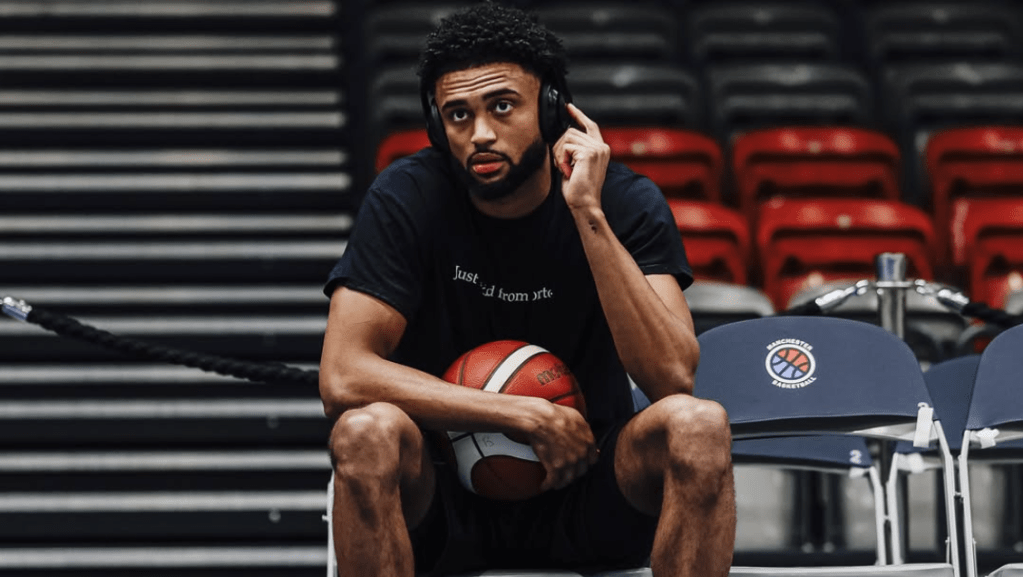
Manchester recruited this summer as if those rules still applied to them. They signed Kayne Henry, a homegrown forward returning from Germany, and Tim Adetukasi, another British-developed player with experience abroad. Kyle Carey re-signed after a strong finish to last season. But the headline move was the homecoming of guard Kaiyem Cleary — “just a kid from Gorton” — who grew up mere minutes from Manchester’s arena, the NPBC.
Ambition Attracts Talent
Through the opening stretch of the season, Manchester are second only to London in the share of minutes played by British players.
| Team | % Minutes Played by British Players |
|---|---|
| London Lions | 56.6% |
| Manchester Basketball | 33.8% |
| Surrey 89ers | 33.2% |
| Sheffield Sharks | 25.8% |
| Leicester Riders | 24.6% |
| Caledonia Gladiators | 22.8% |
| Newcastle Eagles | 21.1% |
| Bristol Flyers | 17.1% |
| Cheshire Phoenix | 14.4% |
Here “British” means that Eurobasket lists British as one of a player’s nationalities. It doesn’t capture the Champions League’s stricter homegrown definition, but it does indicate which clubs are giving minutes to players with British nationality.
In both London and Manchester’s cases, the balance was shaped by rules — for London, the SLB’s import limits; for Manchester, the Champions League’s homegrown requirements. Different systems, same effect.
Blending Basketball Worlds
Manchester’s decision to appoint Matthew Otten, fresh off a title-winning season in Austria, followed the same logic that guided last year’s hire of Herman Mandole — a belief that European experience can raise the club’s ceiling.
Around him sit assistants who bring contrast. Antoine Broxsie offers NBA experience; Matt Pitkin comes from the domestic system. Their paths are distinct, their lessons varied, and the hope is that those perspectives become greater than the sum of their parts.
The aim is clear: to blend European standards, NBA ideas, and domestic knowledge into something that represents British basketball at its best.
Becoming Manchester
For all their intent, Manchester have not yet reached the level they imagined. They’ve shown talent, and individual players have produced explosive moments, but the team hasn’t quite gelled — still searching for the rhythm and cohesion that define genuine contenders.
It’s a frustrating reality for a club that aimed higher. They wanted to look like a Champions League side using the ENBL as a stepping stone, yet they’ve looked at home in the competition itself. That frustration is also proof of progress — a sign that expectations have moved ahead of results.
Manchester are still learning what it takes to become the club they set out to be. The journey looks different to what they imagined, but somewhere in the distance between intent and result, the shape of that future is already visible.
