
Category: Club Profile
-
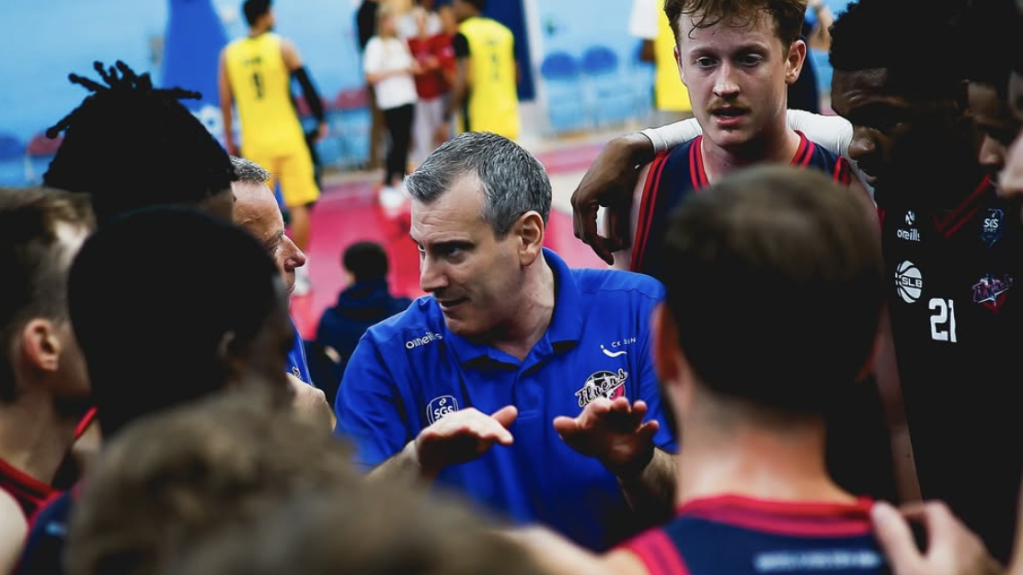
Bristol Are Trusting the Game Itself
Bristol have started the season with a different kind of rhythm. Three SLB games so far have produced four different leading scorers — Zach Anderson in the opener, Cameron Holden and Jonathan Brown tied as joint top scorers in game two, and Will Yoakum leading in game three. This is a roster built on balance,…
-

Sheffield Are Betting on Continuity
Atiba Lyons has been head coach in Sheffield since 2008 — seventeen years on the sideline, a rare constant in British basketball. In a league defined by churn, where imports cycle in and out and rosters are rebuilt every summer, his presence has given the Sharks a stability most clubs can’t match. Continuity is the…
-

Manchester Have Found Their Identity
When Manchester Basketball appointed Herman Mandole at the end of February, they weren’t just changing coaches—they were searching for clarity. Up to that point, they’d been a team of interesting parts without a clear idea of how to fit them together. Now, two months later, they’ve found something they lacked all season—an identity. This isn’t…
-

Cheshire Refuse to Change
In a league defined by parity, a clear identity can be a competitive edge. Cheshire have leaned into theirs more than anyone—playing faster, shooting more, and living with the consequences. But as the season has unfolded, that commitment has begun to look more like a limitation than a strength. They still play with breakneck pace…
-

London Are Grit Over Glamour
Peter Božić was at the helm at London last season during the 777-era, leading a talent-laden London squad that had clear advantages over the rest of the league. Now, the budget is smaller, the roster no longer towers over the league, and he’s proving his coaching pedigree in a different way. Instead of winning through…
-

Newcastle’s Offence Is Unique and It’s Working
Newcastle’s offence is built differently from the rest of the SLB. While most teams rely on ball movement and structured play to generate open looks, the Eagles put the ball in the hands of their best scorers and let them go to work. Their system is built around players who can create and finish their…
