
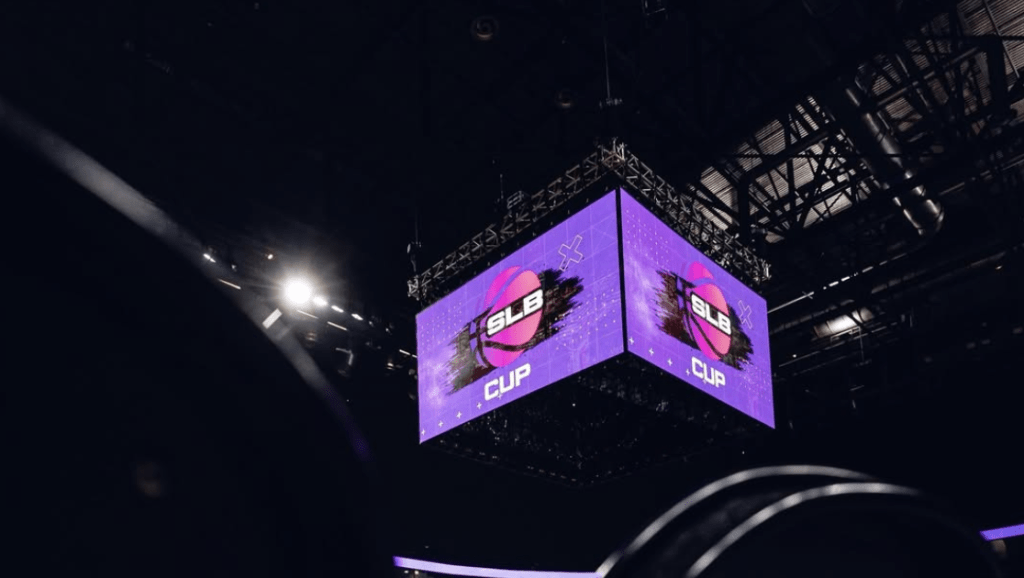
The SLB started the season unrecognised, in dispute with its governing body, missing the referees from the previous season, and with a FIBA taskforce hanging over the sport.
However fragile it all felt, the ball still went up in the air.
Room for Ambition
The SLB Operating Rules were published at the start of the season, confirming a rule change that had already been discussed in a London Lions press conference.
Last season, the league operated with a salary cap. This season, it moved to an import-tax system. Clubs spending over £800,000 could use four non-national players in the SLB. Clubs spending under £500,000 could use six.
The rule gave clubs permission to spend more and build rosters for European competition, but only if they used fewer imports in the SLB.
London were the only club in the top band. Everyone else was in the bottom. The rules gave every club the same option, but London were the only one with the budget to use it.
Recognition Arrives
One month into the season, the FIBA taskforce suspended the BBF’s authority to recognise domestic men’s competition. Three weeks later, the SLB entered into a direct recognition agreement with FIBA. A week after that, the BBF entered liquidation.
The fight that had defined last season and dragged across the summer ended with a handful of statements. It was the most important off-court win of the SLB’s short life.
What It Took
On the court, London were unbeaten when they arrived at SGS College Arena for their ninth game of the season.
It had taken two months of basketball, but Bristol managed to inflict the first loss on London. They held them to 54 points. London shot 3-for-29 from three. The league had its first proof of how much had to go wrong for them to lose.
Control Returns Slowly
It took until the start of February for last season’s officials to start returning in numbers. Three appeared on the same day. After that, more familiar names came back almost every week.
Not all of them returned. The crews still looked different from the season before. But the newer cohort had also got better after half a season of experience. Games felt more controlled.
No one had ever said why the referees had been missing, or why they started coming back. But the two issues that had followed the league into opening night had eased. The SLB had direct recognition from FIBA, and more games had senior referees on the floor.
The Stage Got Bigger
London’s first silverware had come against Newcastle in January. The Cup final in March would be remembered differently.
London and Manchester met at the AO Arena. For long stretches, it looked like the league’s best version of itself: two talented teams from major cities, both competing in Europe, both built around GB talent, playing in a major arena in a game with an edge.
Then, in the final seconds, Kam McGusty taunted the Manchester bench, as Gabe Osabuohien had done to London a week earlier. Max Jones shoved Tarik Phillip in the back. The benches emptied. Players and coaches rushed onto the court as the game ended in a shoving match.
London had secured their second trophy of the season, but the moment was overshadowed.
Eight days later, the SLB Disciplinary Panel said it was investigating the incident. The season ended without another public statement.
Other disciplinary issues followed in the run-in without any public process to point to.
Recognition had been resolved. The refereeing picture had started to repair. Discipline became the first problem of the season the league seemed unable to address.
Other Markets Noticed
Manchester reached the ENBL final the hard way. They went in as a fifth seed, knocked out fourth-seeded Dinamo Zagreb behind a heroic Gabe Osabuohien fourth quarter, then edged top-seeded Syntainics MBC in the semi-final.
Newcastle’s run the year before no longer looked like a one-off.
Then the player market showed the league was being watched. RaeQuan Battle left Leicester mid-season for Serie A. Isiah Small got a chance in Israel after playing for Surrey.
The SLB had improved enough for its clubs to go deeper into Europe, and for its best players to be wanted elsewhere.
Out of Reach
When the Championship ended, London were 26-6 and six wins clear.
The gap had been there from the start: London were built for EuroCup and too strong for the rest of the SLB. They won the Trophy, won the Cup, finished top of the Championship, and reached the O2 final with the quadruple still alive.
Waiting for them at the O2 were Cheshire, the team that had finished second in the Championship, led by MVP Pat Robinson.
The Play-off final was broadcast on BBC iPlayer and the BBC Sport website. After a season spent becoming more stable and more ambitious, the league had its biggest game in front of a wider audience.
London dominated the final from start to finish. The rest of the league had chased them all season, but never quite reached them. If the salary rule change was designed to bring British talent back to the league, it had worked. If it was designed to create parity, it had not.
Harder to Ignore
This season began with problems to get through. By the end, the SLB had enough stability for its ambition to show. Its clubs were more credible in Europe, its best players were being watched by stronger markets, and top-flight British basketball was back on the BBC.
The Cup final put that ambition under lights. For long stretches, it looked like the league had arrived. Then the final seconds became the story, and discipline hung over the rest of the season.
As the league becomes harder to ignore, so do its problems.
